Texting Doctor Parkinson

Imagine no waiting room at the doctor's office. Scratch that. Now picture no doctor's office at all. In this practice, you make appointments via text, video chat or email, and sometimes your doctor makes house calls. Oh, and you deal directly with the insurance company, because there's no staff for that. Meet Dr. Jay Parkinson. After completing his residency at Johns Hopkins University, the pediatrician was unsure of what he wanted to do with his life. So he founded Hello Health, a newfangled practice in Brooklyn that promises to streamline the process of health care. Is it working? 

"Evidence says that about 50 percent of all doctor visits are unnecessary. But they only get paid to bring you into the office, so that's what they do. So, if you don't have that incentive, that means 50 percent of problems can be taken care of without physically seeing you, but augmented with good communication," says Parkinson. He describes the genesis of his idea, and his thoughts on how we can reform the U.S. health care system. What about developing a Facebook for health care? "How much would it cost to Facebook if it were designed to power medicine to sign up all 11 million healthcare workers in America? It surely wouldn't cost $20 billion."

Finally, Parkinson weighs in on the consequences of the potential death of primary care in America. Plus, should we stop taking prescription drugs? You might rethink filling that prescription when you find out what some medications could be doing to you.

What do you have to work with?

At a pivotal point in the movie "Hedwig and the Angry Inch," Tommy discovers in an intimate moment that Hedwig is not who he thought she was...

Tommy: What is that?
Hedwig: It's what I have to work with.

You don't have to let those perceived flaws define you. You don't have to let those fears stop you. You just have to have the willingness and determination to push past those negative thoughts, start embracing your special qualities, and take the risk of putting yourself out there. Hedwig knows her limitations better than most. But she's out there, committed to making it work.

How many times have I kept myself in a rut instead of seeing a simple way out? An inspiring post from Lisa Braithwaite. And Pauline Shirley picked up the theme, a little more actively, on her blog

As part of his unique marketing strategy, my dentist engraves a message on the complimentary toothbrush I receive as compensation for my stress due to the dreaded semiannual cleaning.

Today, he engraved, “Spring 2010 Plant Something!”

I imagine, that like me, when you read that you thought of planting spring flowers, vegetables or perhaps a shrub or tree.

Think bigger than that! Interpret ‘Plant something” as a suggestion to plant an idea; to plant a positive thought; to plant the beginning of an entrepreneurial venture; to plant potential in the possibilities of yourself and others.


don't get caught: 10 ways I use Twitter to boost my creativity

To spark plain old ideas.  Some of the most popular blog posts I've ever written came from questions on Twitter.  "Could you help me do this...?" "Where do you find that?"  or "What do you think about...?" are my favorite queries, because they always spark ideas.  I think of them as reader requests, and run with them--and it never fails.

Here's reason #9. Click through to read the rest.

7 ways to reach outside your conference (via @dontgetcaught) #d27tm Toastmasters take notice.

Being present at a conference is still the best way to get the whole experience. But there are good reasons to consider opening up your conference to those who couldn't (or wouldn't) attend.  It's a great way to grow a base of future attendees and whet their appetites for your offerings; generate more revenue even when the hall is full; raise the convener's visibility and reputation; gain vital market data on those who do and do not attend; field-test the wider popularity of key sessions and workshops; and provide a cost-effective alternative in tight budgetary times.

There's one more essential reason:  Audiences now have the keys to unlock what's going on in conference sessions and share it with the world.  You'll do best if you follow their lead and use these tactics to expand your conference's reach:

  1. Make it easy for attendees to tweet and share:  This is still the easiest way to expand conference reach. Make it clear that tweeting and otherwise sharing conferences is encouraged, and offer hashtags at the start of every session.Look for ways to provide extra outlets, free wireless Internet, and charging stations for laptops.  If I were a sponsor or advertiser, I'd stop handing out branded pens and start focusing on giveaways like mini-surge-protectors and charging stations, and offer to sponsor the wi-fi for a day or the whole conference...no better way to be popular. 
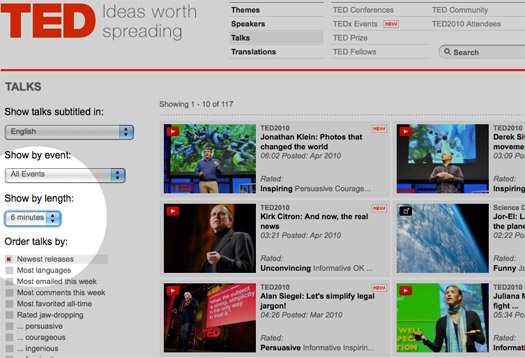
  2. Add nearby satellite locations with live-streamed proceedings: The ever-sold-out TED conferences limit attendance and feature very high registration fees. But TEDActive, a simultaneous event, offers attendees a similar setting, high-definition simulcasts from TED, plus live talks and music and mingling. TED 2011's already sold out, but TEDActive for 2011 is still taking applicants as of this writing.
  3. Add regional satellite locations with live-streamed proceedings: The 2010 Nonprofit Technology Conference (NTEN for short) starts in a few days in Atlanta, but is offering low-cost live viewings in Austin, New York and Washington, DC, plus additional livestreams and webinars. And that alone is creating buzz in advance of the meeting. As with the first option, this preserves the networking aspects as well as the conference content.
  4. Share video on Facebook, UStream and YouTube:  This might mean video extras, like interviews with keynote speakers or hallway chats with important attendees, but get some video online during and after the conference, and make sure your streamed sessions are archived and easy to find.
  5. Make RSS mandatory for all online conference content:  Use TED as your model here, too--its RSS page includes feeds for high-def, video and audio from its conferences and subsequent online postings of TED talks, all of which are made available for free after the conference.  (While you're at it, share your closed proceedings later online.)
  6. Get speakers to share:  Ask speakers to post their bios, handouts and background material online in advance of the session, and their slides, texts or transcripts after the session (it'd make sense to have RSS feeds here, too).  And if speakers will tweet or take questions on Twitter or other social sites, so much the better. While this takes advance work, make your commitment to a rich online offering clear early--and show speakers what's in it for them.
  7. Ask non-attendees to send in questions:  In advance of your sessions, ask attendees to submit questions via Twitter, email or other social sites (and give them a deadline so you have time to sort the questions and share them with speakers).  Go here to see one example of how the White House is handling submitted citizen questions.  Make sure speakers know about and address at least some of the submitted questions, and consider using a Twitter moderator on each panel to keep an eye on--and share--questions as they come in during the session.
One counter-trend that I don't recommend:  Cracking down on audience posts during conference sessions, or limiting what reporters can cover, as a number of medical societies did recently when they banned reporters from using video or audio recording, even to take notes.  Try looking at the live-and-in-person experience as what's unique, and the rest of the sharing a great marketing tool -- the latter can never really trump the former.

Denise Graveline shares what and why, and I say God bless her. My somewhat narrow perspective is that it's flat out wrong for a large Toastmasters district like District 27 to be happy with attendance of only 200 to 300 at a District Conference, especially when there are important elections and ballot questions on the business agenda. Live streaming sounds a bit over the top for us, but we could certainly make sure that members tweet the proceedings, that video is made available widely, that speakers share their content, and that questions are sought from members who aren't present.